
154 Olivier St, Brooklyn, Pretoria, 0081
By The Dr Peptide Editorial Team
NAD+ (nicotinamide adenine dinucleotide) is a coenzyme found in every living cell. It’s essential for converting food into energy, repairing DNA, and regulating hundreds of cellular processes. NAD+ levels decline naturally with age, which is why there’s growing interest in whether supplementing precursors like NMN or NR, or receiving NAD+ injections, might support metabolic and cellular health.
You’ll encounter NAD+ in conversations about energy, ageing, brain function, and metabolic health because it sits at the centre of how your cells produce energy and maintain themselves. Every time a cell converts glucose into ATP—the energy currency your body actually uses—NAD+ is involved [1]. As we age, NAD+ levels in tissues decline substantially: by midlife, levels can be 50% lower than in youth [2]. This decline tracks with many age-related changes—reduced energy, slower cellular repair, increased oxidative stress—which is why NAD+ has become a focus in longevity and metabolic medicine.
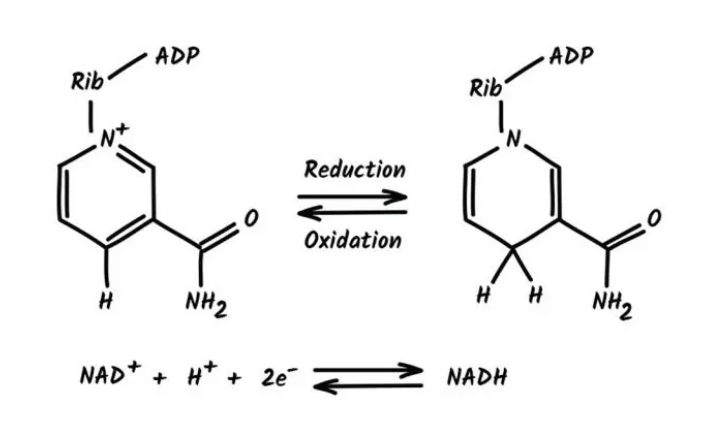
NAD+ itself is a small molecule made from vitamin B3 (niacin). Inside your cells, it exists in two forms: NAD+ (oxidised) and NADH (reduced), and it shuttles between these forms as it participates in energy metabolism [1]. It’s a cofactor for enzymes called sirtuins, which regulate gene expression, DNA repair, and inflammation, and for PARPs (poly ADP-ribose polymerases), which repair damaged DNA [3].
The evidence that NAD+ levels decline with age is robust and consistent across species. Human studies using muscle biopsies, blood samples, and skin samples show significant reductions in NAD+ concentration from the third decade onwards [2][4]. Animal studies demonstrate that boosting NAD+ levels—either by supplementing precursors or by genetic manipulation—can extend lifespan in yeast, worms, and mice, improve mitochondrial function, enhance insulin sensitivity, and protect against neurodegeneration [5][6].
In humans, the most studied approach is oral supplementation with NAD+ precursors—nicotinamide riboside (NR) and nicotinamide mononucleotide (NMN)—both of which the body can convert into NAD+. Small randomised controlled trials show that NR and NMN supplementation can raise blood NAD+ levels [7][8]. Some trials report improvements in markers of insulin sensitivity, blood pressure, and physical performance in older adults, though effect sizes are modest and not all studies replicate these findings [7][9].
Intravenous and injectable NAD+ is also used, particularly in integrative and functional medicine settings. The rationale is that delivering NAD+ directly bypasses the digestive system and achieves higher tissue concentrations. However, the evidence base for IV NAD+ is much thinner than for oral precursors: there are case reports and observational series, but very few controlled trials, and no long-term safety data in large populations [10].
A clinician assessing whether NAD+ supplementation (oral precursors) or injectable NAD+ might be appropriate would start by asking: what are you hoping to achieve, and what does your baseline health look like? NAD+ isn’t a one-size solution, and the evidence is clearest for specific populations—older adults with metabolic concerns, people with documented mitochondrial dysfunction, or those with conditions where cellular energy metabolism is impaired.
For oral precursors (NMN, NR), typical doses in trials range from 250 mg to 1,000 mg daily. These are generally well tolerated, with mild gastrointestinal upset being the most common side effect [7][8]. A prescriber would consider your age, metabolic health, medication list (NAD+ precursors can interact with medications affecting methylation pathways), and whether you have conditions that might be contraindications—active cancer being the most significant, as NAD+ supports cellular proliferation and the theoretical concern is that boosting NAD+ could support tumour growth, though human evidence for this is lacking [3].
For injectable NAD+, the approach is more cautious. Doses vary widely between practitioners (commonly 50-200 mg per injection), in the case of IV infusions; these are typically given slowly over 2–4 hours because rapid infusion can cause flushing, nausea, chest tightness, and anxiety [10]. A responsible prescriber would discuss the evidence gap openly: Injectable NAD+ is used, but we don’t have the trial data to say confidently what it does or doesn’t do in humans over time.
In South Africa, oral NAD+ precursors (NMN, NR) are available as supplements and are not scheduled medicines. IV and injectable NAD+ is prescribed off-label and must be compounded; it’s not a registered medicine for the indications it’s commonly used for (fatigue, cognitive support, metabolic optimisation). This means it falls under Section 21 of the Medicines Act—individual prescription, individual patient, no general claims about safety or efficacy permitted under SAHPRA law.
If you’re considering NAD+ supplementation or IV injectable therapies and you experience unexplained weight loss, night sweats, persistent fevers, or any symptoms that could indicate an underlying malignancy, stop and speak to your doctor immediately. NAD+ supports cellular metabolism broadly, and that includes rapidly dividing cells. If you have a known cancer diagnosis or are in remission, NAD+ therapy should not be started without your oncologist’s explicit involvement.
If you develop severe flushing, chest pain, palpitations, or difficulty breathing during or after an IV NAD+ infusion, this is a medical emergency. Stop the infusion and seek urgent care.
Intravenous NAD+ in the formulation and for the indications discussed here (metabolic support, fatigue, cognitive optimisation, anti-ageing) is not a registered medicine in South Africa. Oral NAD+ precursors (NMN, NR) are available as supplements. Any use of compounded injectable or IV NAD+ must occur under Section 21 of the Medicines Act: prescribed individually by a registered medical practitioner for a specific patient, compounded by a registered pharmacy, and supplied on that basis alone.
NAD+ is a real and essential molecule, and the decline in NAD+ with age is well documented. Oral precursors (NMN, NR) have a reasonable evidence base showing they can raise NAD+ levels, and early human trials suggest potential metabolic benefits, though the data is still emerging. NAD+ injections are used in practice but have much thinner evidence. If you’re considering whether NAD+ therapy might fit your situation—whether you’re dealing with fatigue, metabolic concerns, or simply interested in longevity optimisation—the next step is a consultation with a registered medical practitioner who can assess your specific circumstances and weigh the evidence against your health profile.
If you’ve read this far and are wondering whether this might be appropriate for you, the next step is a consultation with a registered medical practitioner—not just adding something to a cart.
Start your consultation