
154 Olivier St, Brooklyn, Pretoria, 0081
By The Dr Peptide Editorial Team
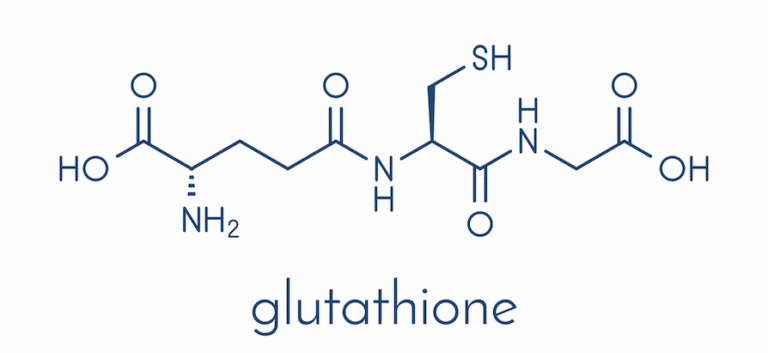
Glutathione (GSH) is a tripeptide—a molecule made from three amino acids linked together: glutamine, cysteine, and glycine. Every cell in your body manufactures glutathione, and it exists in two forms: reduced glutathione (GSH), which is the active antioxidant form, and oxidised glutathione (GSSG), which forms after GSH has neutralised a free radical. The balance between these two forms—your GSH:GSSG ratio—is considered one marker of cellular oxidative stress.[1]
Glutathione sits at the centre of several vital biochemical pathways. It’s your body’s most abundant intracellular antioxidant, meaning it works inside cells to neutralise reactive oxygen species (ROS) and prevent oxidative damage to proteins, lipids, and DNA. It also plays a critical role in phase II liver detoxification, where it binds to toxins and heavy metals to make them water-soluble for excretion. Additionally, glutathione is required for immune cell function, particularly the activity of natural killer cells and T lymphocytes, and it participates in the synthesis and repair of DNA.[2]
Where glutathione sits in the peptide landscape: it’s not a signalling peptide like BPC-157 or a growth-hormone secretagogue like CJC-1295. It’s a functional metabolite—a workhorse molecule that your cells need in abundance to handle oxidative stress and maintain homeostasis. Endogenous production declines with age, chronic illness, poor nutrition, and environmental toxin exposure, which is why supplementation has attracted clinical interest.[3]
At the cellular level, glutathione functions primarily through its sulfhydryl group (the thiol group on the cysteine residue), which can donate electrons to neutralise free radicals. When GSH donates an electron to a reactive oxygen species—say, a hydroxyl radical or hydrogen peroxide—it becomes oxidised to GSSG. The enzyme glutathione reductase then converts GSSG back to GSH using NADPH as a cofactor, completing the redox cycle. This regeneration is what allows a relatively small pool of glutathione to manage a large oxidative burden, as long as NADPH supply (which depends on glucose metabolism and the pentose phosphate pathway) is adequate.[4]
In detoxification, glutathione conjugates with electrophilic compounds—toxins, drugs, heavy metals—via glutathione S-transferase enzymes. The resulting glutathione conjugate is more water-soluble and can be excreted through bile or urine. This is the mechanism by which your liver processes paracetamol, for example; paracetamol overdose depletes hepatic glutathione, leading to toxic metabolite accumulation and liver injury. N-acetylcysteine (NAC), a glutathione precursor, is the standard antidote because it restores the glutathione pool.[5]
Glutathione also regulates the function of other antioxidants. It recycles vitamins C and E back to their active forms after they’ve been oxidised. It modulates nitric oxide metabolism and protects mitochondria—the cell’s energy-producing organelles—from oxidative damage. Mitochondrial glutathione is a distinct pool, and its depletion is implicated in neurodegenerative diseases and age-related mitochondrial dysfunction.[6]
The skin-lightening effect, which has driven much of the off-label use in aesthetic medicine, appears to work through inhibition of tyrosinase, the enzyme that catalyses melanin synthesis. Glutathione shifts melanin production from eumelanin (brown-black pigment) toward pheomelanin (yellow-red pigment), resulting in a lighter skin tone. This effect has been observed in clinical and observational studies, but the mechanism isn’t fully understood and the long-term safety implications of chronic tyrosinase inhibition remain uncertain.[7]
The evidence base for glutathione varies significantly depending on the route of administration and the clinical indication.
Oral glutathione: Bioavailability is limited. A 2014 study in the European Journal of Nutrition found that oral glutathione (500 mg daily for four weeks) modestly increased plasma glutathione levels and reduced oxidative stress biomarkers in healthy adults, but the effect size was small and not all participants responded.[8] A 2017 randomised controlled trial in healthy women showed that 250 mg daily of oral reduced glutathione for 12 weeks improved skin elasticity and reduced wrinkles compared to placebo, though the clinical significance of these changes was marginal.[9] The consensus is that oral glutathione absorption is limited because the tripeptide is broken down by intestinal peptidases; what reaches systemic circulation is mostly the constituent amino acids, which the body can then use to resynthesize glutathione intracellularly.
Intravenous / Injectable glutathione: IV or injection administration bypasses first-pass metabolism and achieves much higher plasma concentrations. A 2016 study in Filipino women found that IV glutathione (600 mg twice weekly for eight weeks) produced a significant reduction in melanin index compared to placebo, with a measurable skin-lightening effect.[10] However, the study was small (N=60) and industry-sponsored. A 2018 systematic review in the Journal of Dermatological Treatment concluded that while several small trials and case series support the use of IV glutathione for skin lightening, the quality of evidence is low, long-term safety data are lacking, and the practice is not supported by major dermatology guidelines.[11]
Detoxification and liver support: Glutathione’s role in phase II detoxification is well-established biochemically. NAC (which boosts endogenous glutathione) is proven effective in paracetamol overdose and has evidence in contrast-induced nephropathy prevention.[12] Direct IV glutathione or glutathione injection is used off-label for heavy metal chelation and in integrative medicine protocols for chronic toxin exposure, but controlled trial evidence is thin. One small 2009 pilot study in Parkinson’s disease patients found that IV glutathione (1400 mg three times weekly) improved motor symptoms, but a later controlled trial failed to replicate the effect.[13]
Immune function and anti-ageing: Observational data link higher glutathione levels to better immune function and lower all-cause mortality in older adults.[14] However, whether exogenous glutathione supplementation translates to improved clinical outcomes in this context is unproven. The evidence remains associational.
Several areas have thin or equivocal evidence:
The evidence is also almost entirely in adults. Paediatric data are minimal, and use in pregnancy and breastfeeding is not well-studied.
In South Africa, there is no SAHPRA-registered glutathione product approved for IV administration for skin lightening, anti-ageing, detoxification, or immune support. Glutathione as an injectable medicine is available through compounding pharmacies and is supplied on a named-patient basis under Section 21 of the Medicines Act, meaning a registered medical practitioner writes a prescription for a specific patient, and a registered pharmacist compounds the preparation.
Internationally, IV and injectable glutathione for skin lightening is not approved by the FDA (United States), EMA (European Union), MHRA (United Kingdom), or TGA (Australia). Some countries in Southeast Asia have seen widespread off-label use, and several health authorities—including the Philippines’ FDA—have issued advisories cautioning against unregulated IV glutathione for cosmetic purposes due to safety concerns and lack of long-term data.[17]
Oral glutathione supplements are widely available as over-the-counter nutritional supplements in South Africa and are not scheduled. They do not require a prescription, though their therapeutic efficacy is limited by bioavailability as discussed above.
The supply of compounded IV or injectable glutathione in South Africa operates within the framework of Section 21 and Section 22A of the Medicines and Related Substances Act. Section 21 allows for the supply of an unregistered medicine if prescribed by a medical practitioner for a specific patient and if the medicine is not readily available as a registered product. Section 22A governs pharmacy compounding—pharmacies may compound medicines that are not commercially available, provided they do so in accordance with Good Compounding Practice guidelines issued by the South African Pharmacy Council (SAPC).[18]
SAHPRA has not specifically prohibited IV glutathione, but the Authority has issued public statements on skin-lightening products more broadly, warning against unsafe formulations and emphasising that any therapeutic claim—including skin lightening—requires registration and approval. Aesthetic uses are still therapeutic claims under the Medicines Act, not cosmetic claims, which means they fall under SAHPRA jurisdiction.[19]
If you are considering injectable glutathione, it is critical that:
Over-the-counter ‘glutathione drips’ offered at wellness spas or aesthetic clinics not supervised by a medical practitioner and not dispensed by a registered pharmacy are operating outside the legal framework and pose safety risks, including contamination, incorrect dosing, and lack of medical oversight for adverse events.
Glutathione is generally well-tolerated, but side effects and risks do occur:
Common side effects of IV glutathione: Flushing, nausea, abdominal cramping, and headache during or shortly after infusion. These are usually mild and self-limiting. Some patients report a transient sulfur-like taste or odour.
Allergic reactions: Rare but documented. Anaphylaxis to IV glutathione has been reported in case reports. Any new IV infusion carries this risk.[20]
Zinc depletion: Chronic high-dose glutathione may chelate zinc and lead to deficiency. This is more of a theoretical concern than a well-documented clinical problem, but patients on long-term IV protocols are sometimes advised to monitor zinc levels.
Skin and hair effects: Some users of IV glutathione for skin lightening report patchy depigmentation or lightening of hair colour. These effects are usually reversible upon stopping treatment but can be distressing.
Contraindications include:
Drug interactions: Glutathione may theoretically reduce the efficacy of certain chemotherapy agents (as noted above, some cancers rely on glutathione depletion for chemo sensitivity). If you are undergoing cancer treatment, discuss any supplementation with your oncologist first.
If you experience chest tightness, difficulty breathing, widespread rash, or dizziness during or shortly after a glutathione infusion, this is a medical emergency—stop the infusion and seek immediate medical attention.
A consultation for glutathione therapy—whether oral or IV—starts with a detailed clinical assessment. Your doctor will ask:
For IV glutathione, the prescriber should discuss:
If the decision is made to proceed, you’ll receive a prescription, which is taken to a compounding pharmacy. The pharmacy prepares the IV preparation and dispenses it with instructions for administration. Administration is usually done in a clinical setting with IV access established by a registered nurse or doctor, and you’re observed for at least 30 minutes post-infusion for any adverse reactions.
Follow-up appointments assess response, tolerability, and whether to continue, adjust, or stop. There is no fixed duration; some patients use IV glutathione in short courses (e.g., eight weeks), others intermittently, others long-term. The lack of standardised protocols reflects the lack of robust clinical trial data guiding practice.
Glutathione is a fascinating and essential molecule—your cells can’t function without it. The question isn’t whether glutathione matters (it does), but whether supplementing it exogenously, particularly by IV infusion for off-label indications, delivers meaningful clinical benefit and is safe over the long term. The evidence is strongest for oral NAC as a glutathione precursor in specific acute settings like paracetamol overdose. For IV glutathione in aesthetic, anti-ageing, and wellness contexts, the evidence base is much thinner, though many patients and practitioners report subjective benefit.
If you’re considering glutathione—especially IV glutathione for skin lightening or detoxification—the right next step is not adding it to a plan or ordering online, but a proper consultation with a registered medical practitioner who can assess whether it’s appropriate for your situation, prescribe it correctly if indicated, and monitor you for safety. This is not a decision to make based on a wellness influencer’s Instagram post or a spa menu.
If you’ve read this far and are wondering whether glutathione might be appropriate for you, the next step is a consultation with a registered medical practitioner—not adding something to a cart.
Start your consultation